


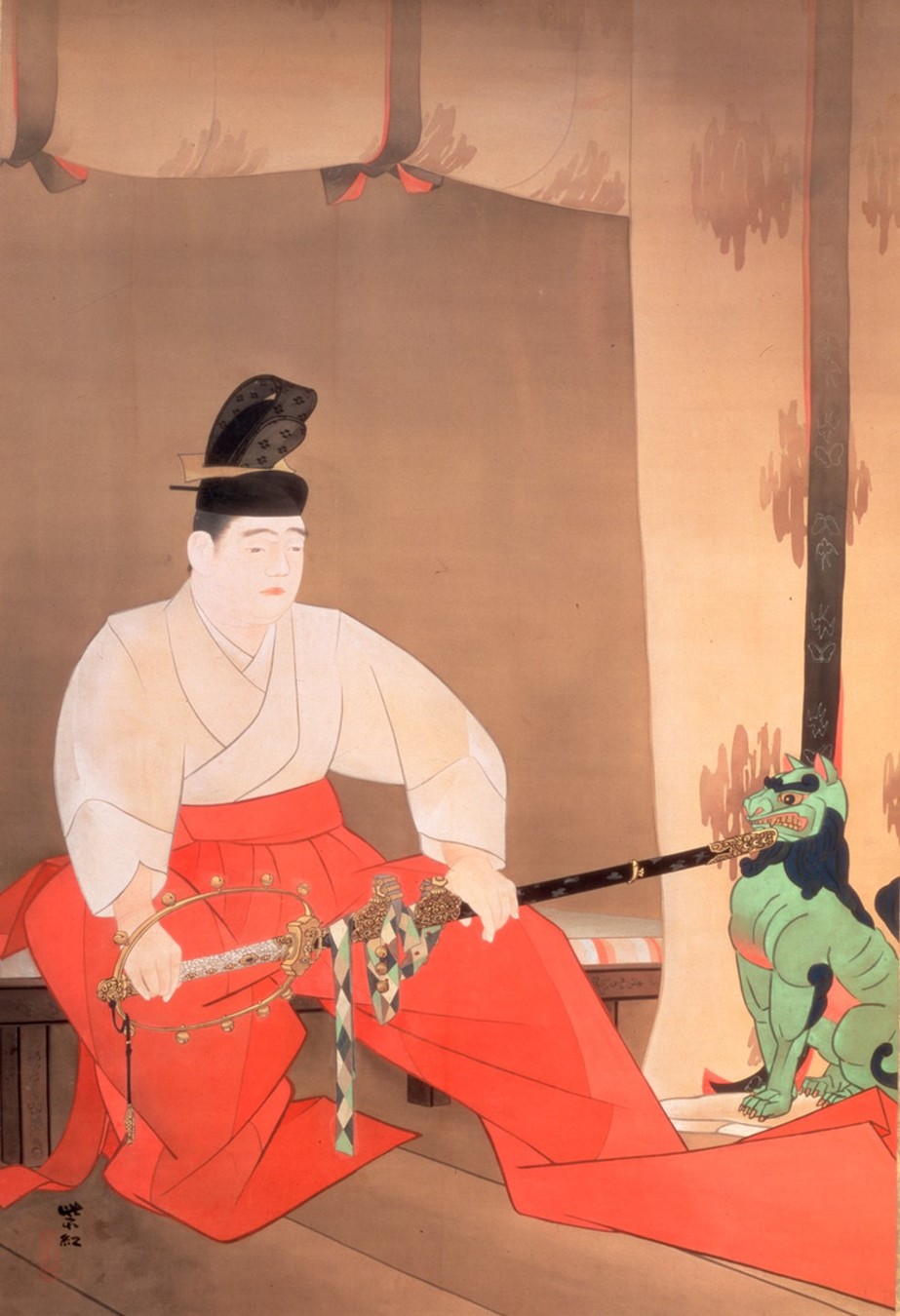
Portrait of Taira no Masakado
平親王
- Birth Year
- 1880
- Death Year
- 1916
- Date
- ca. 1907
- Technique, Material, Format
- color on silk, hanging scroll
- Dimension
- 164.9 x 112.1 cm
- Donor name
- Mr. Hara Noriyuki and Mrs. Hara Etsuko
- Category
- Nihonga (Japanese-style Painting)
- Inventory Number
- 88-JP-011
Yokohama-born artist Imamura Shiko, who later broke new ground with his landscape masterpieces Eight Views of Omi and Scenes from the Tropics, was passionate about finding new innovations in history painting in his early years. The Heian-period warlord Taira no Masakado, supported by those dissatisfied with the imperial court, took the name of "new emperor" for himself, and was later described in books as "Taira no Shin-O". In ukiyo-e woodblock prints and other media, he is often associated with the image of a vengeful spirit or a fighting god. Here, however, Masakado is silently contemplating with a sacred sword in his hand and a facial expression filled with determination. In the Meiji period (1868–1912), it was forbidden to depict an enemy of the Emperor, but this work shows Shiko’s ambition and audacity.
(UCHIYAMA Junko)