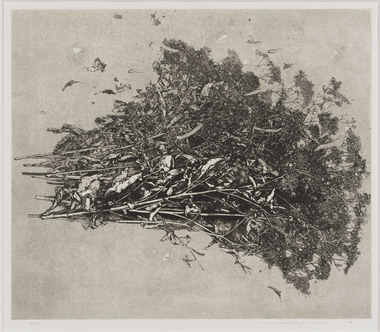
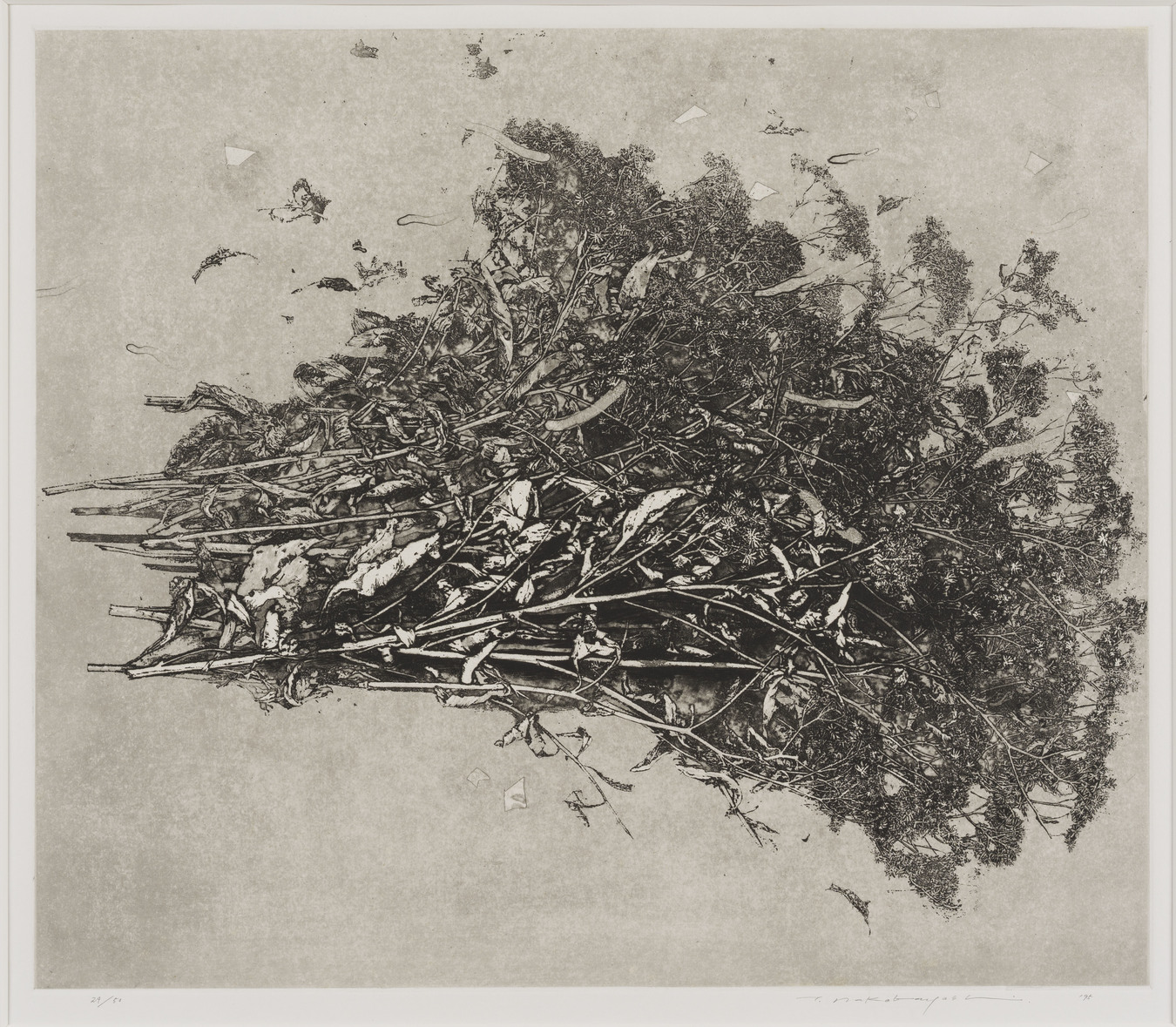
Nakabayashi Tadayoshi’s chosen technique is copperplate etching, a type of printmaking reliant on the fact that metals dissolve in acids. The plate is dipped in an acid solution to melt away lines and planes that are then filled with ink and printed. Dipping the plate in acid creates a chemical reaction called corrosion that produces harmful gases. Conscious of this danger, Nakabayashi was careful about the safety of his studio, but he also appreciated a line from a poem by Kaneko Mitsuharu: "There’s nothing that won’t decay in the end!" He was also interested in corrosion itself. This image of a bouquet was made by dipping the copper plate in acid and then deliberately letting it corrode over an extended period of time. It captures the idea that all living things will eventually decay.
(KATADA Yuko)

Nakabayashi Tadayoshi’s chosen technique is copperplate etching, a type of printmaking reliant on the fact that metals dissolve in acids. The plate is dipped in an acid solution to melt away lines and planes that are then filled with ink and printed. Dipping the plate in acid creates a chemical reaction called corrosion that produces harmful gases. Conscious of this danger, Nakabayashi was careful about the safety of his studio, but he also appreciated a line from a poem by Kaneko Mitsuharu: "There’s nothing that won’t decay in the end!" He was also interested in corrosion itself. This image of a bouquet was made by dipping the copper plate in acid and then deliberately letting it corrode over an extended period of time. It captures the idea that all living things will eventually decay.
(KATADA Yuko)