
Yokohama Racecourse
横浜根岸競馬場
- Birth Year
- 1883
- Death Year
- 1943
- Date
- ca. 1912–26
- Technique, Material, Format
- oil on canvas
- Dimension
- 45.0 x 52.5 cm
- Donor name
- Mr. Kaneko Noriaki
- Category
- Oil or Other Painting by Japanese Artist
- Inventory Number
- 2021-OJ-011
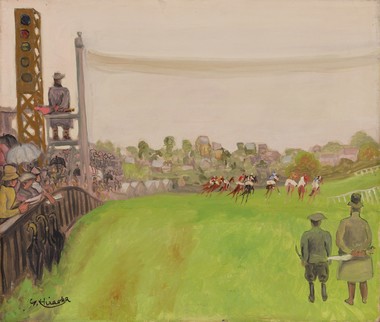
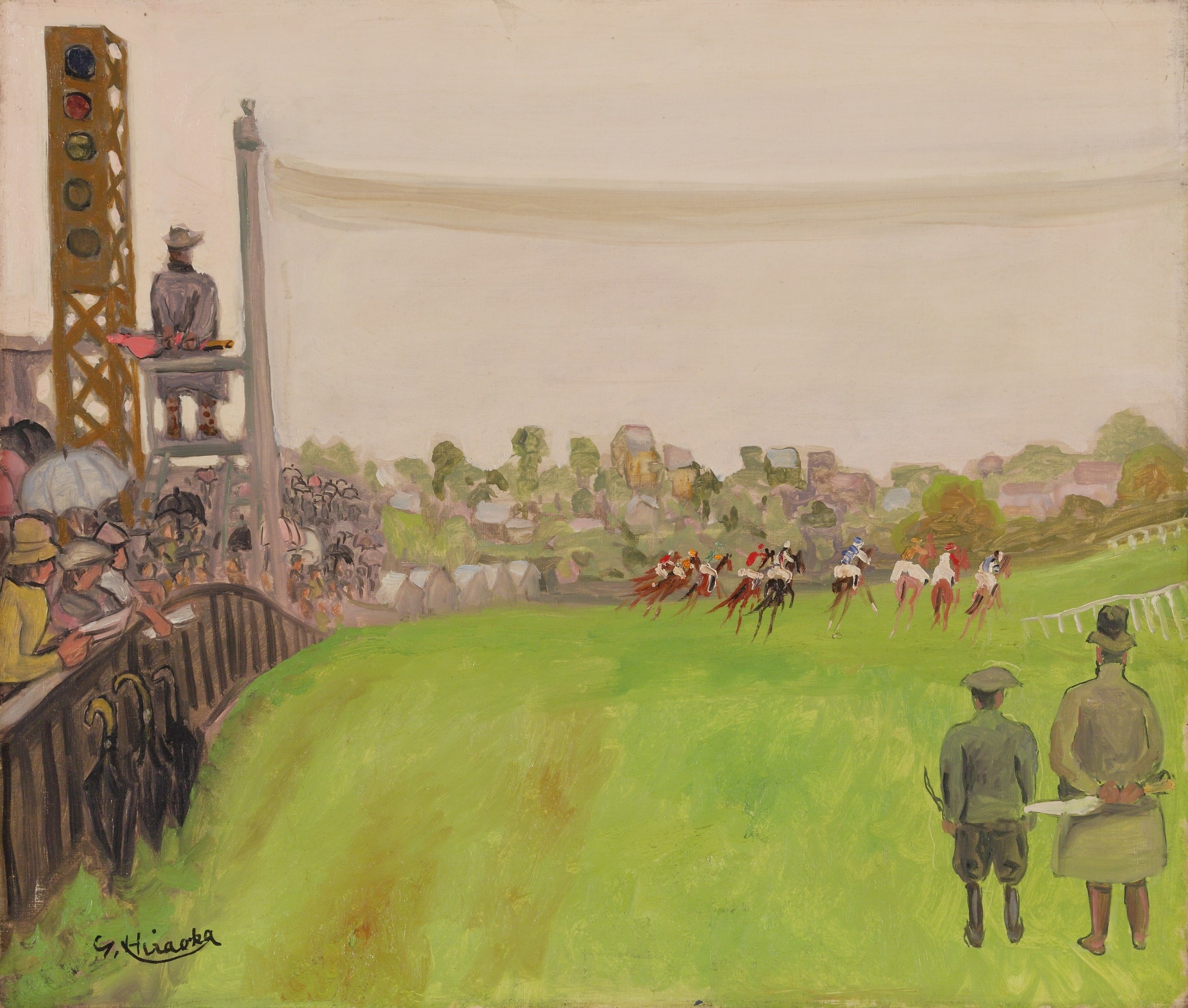
Horse racing was one of the elements of Western culture brought to Japan by the foreigners who came after the port of Yokohama was opened. This painting is thought to depict Yokohama’s Negishi Racecourse, which was established in 1866 as the nation’s first permanent Western-style track. The artist, Hiraoka Gonpachiro, was active as a painter, but he was also an accomplished business person, having opened a Parisian-style cafe in Tokyo’s Ginza district. He was also deeply connected with the entertainment business and planned cultural projects for the Kagetsuen amusement park that was run by his adoptive father in Yokohama. This painting shows no horses or jockeys in close-up, but instead captures the racetrack scenery from a slightly distanced position. Perhaps the artist’s primary interest lay in the culture and people of the racing, including its spectators.
(HIBINO Miyon)