
Non Figurative Sculpture
非具象彫刻
- Birth Year
- 1891
- Death Year
- 1956
- Date
- 1918 (reproduced in 1994)
- Technique, Material, Format
- wood, metal
- Dimension
- 51.5 x 27.0 x 26.5 cm
- Category
- Sculpture or Three-dimensional Work by Foreign Artist
- Inventory Number
- 94-SF-001
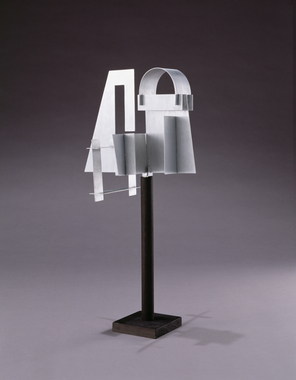
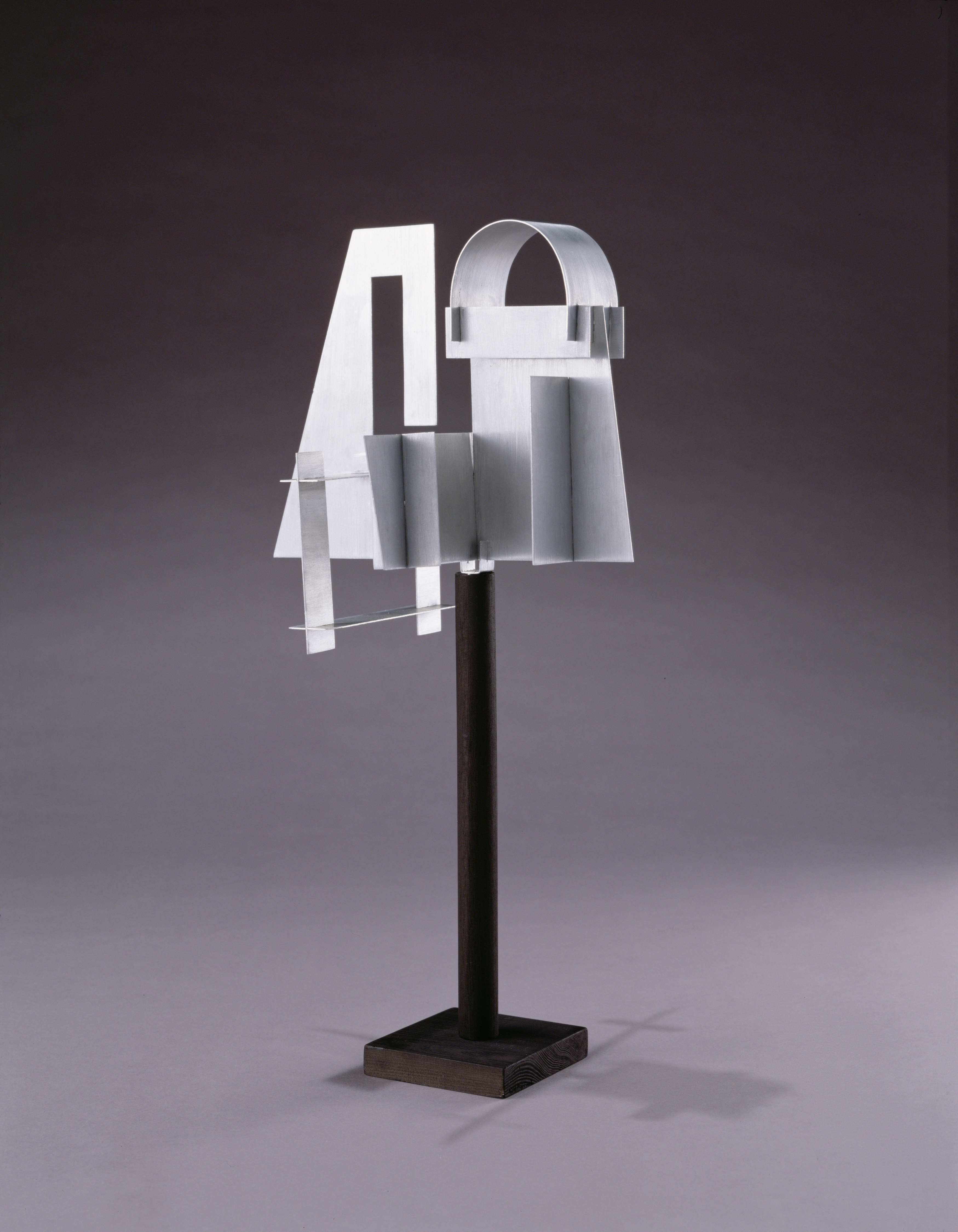
This piece was originally made of cardboard. Since the original was lost, it was re-created using thin sheets of aluminum following the artist’s original documents. The various parts have been cut out into rectangles, trapezoids, and thin strips, and then interlocked at right angles into incisions to form a three-dimensional object. As you walk around the piece, the surfaces and lines, areas of light and shadow interchange. Sometimes it appears symmetrical and sometimes not. The sculpture is supported at one point by a column that holds it above the ground. It seems to be trying to free itself from gravity. In Soviet Russia, just after the socialist revolution, Alexander Rodchenko wanted to unite painting, sculpture, and architecture. Rather than make art that depicts something, he wanted to create a new era with real forms themselves, made of lines and surfaces drawn with a ruler and compass.
(NAKAMURA Naoaki)