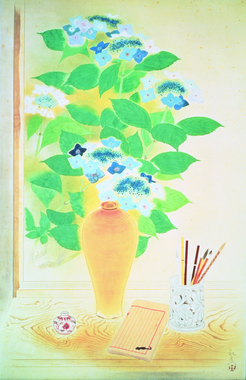
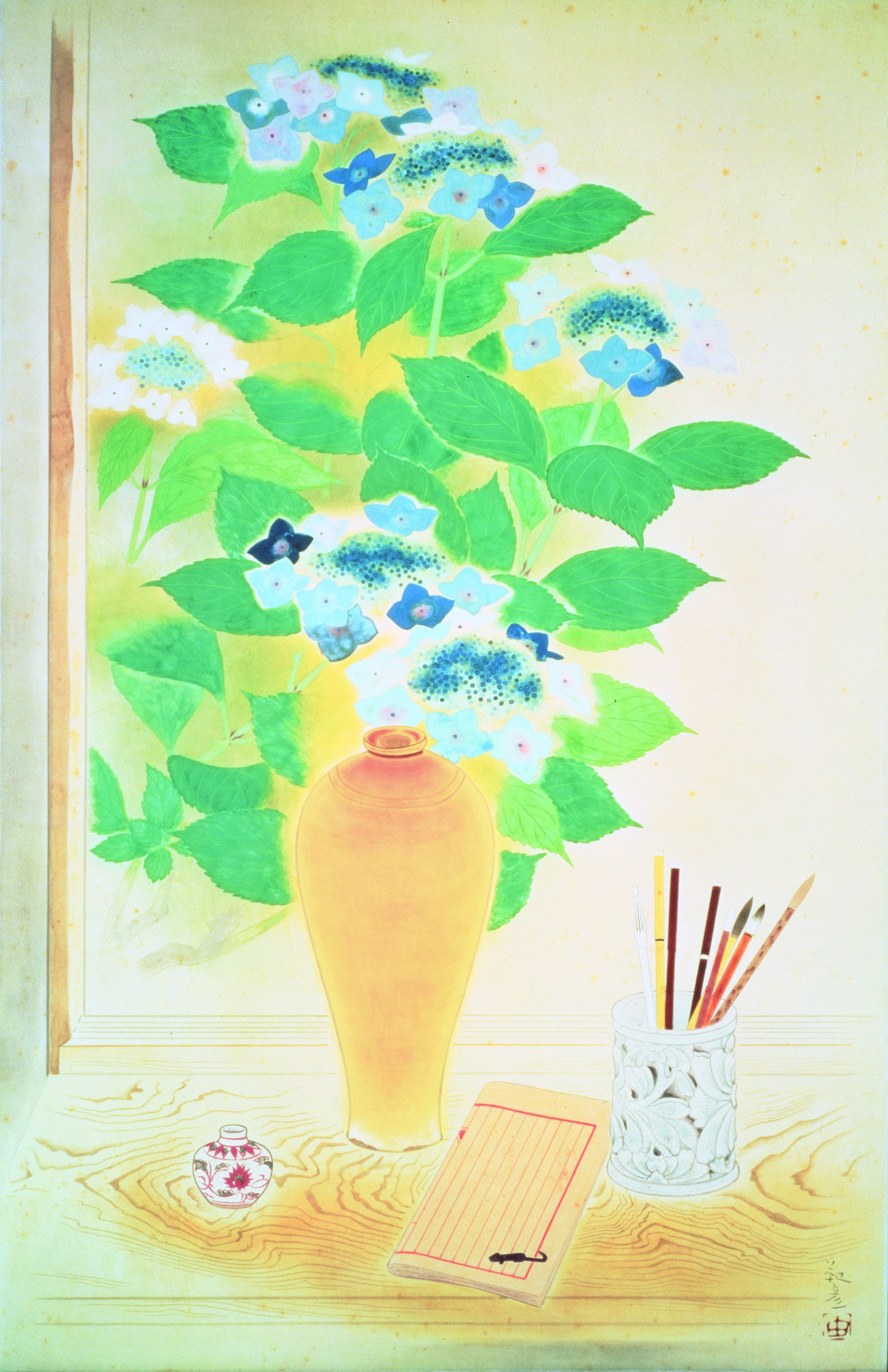
Yasuda Yukihiko was one of the leaders in the Nihonga (modern Japanese-style painting) scene from the Meiji Era (1868–1912) until after World War II. He frequently tackled historical subjects, constantly pushing the boundaries of Nihonga with his elegant style. This painting was made during the period of postwar reconstruction. The hydrangeas in the garden bloom magnificently and the scene radiates brightness and a sense of freedom. The interior and exterior are integrated so well that for a moment we think the flowers are arranged in the yellow-glazed vase that sits in the window. Standing on the windowsill alongside the central vase is a small pot with a red picture, a white porcelain brush holder with brushes, a bundle of note paper, and a paperweight repurposed from an obi-dome (sash clip). None is designated as the main subject; each is meticulously depicted and arranged. All are items the artist actually cherished and used himself. The tranquil scene seems to reflect the artist’s state of mind at the time, cherishing and delighting in peaceful days spent surrounded by treasured objects and admiring the flowers in the garden. (YATSUYANAGI Sae)

Yasuda Yukihiko was one of the leaders in the Nihonga (modern Japanese-style painting) scene from the Meiji Era (1868–1912) until after World War II. He frequently tackled historical subjects, constantly pushing the boundaries of Nihonga with his elegant style.
This painting was made during the period of postwar reconstruction. The hydrangeas in the garden bloom magnificently and the scene radiates brightness and a sense of freedom. The interior and exterior are integrated so well that for a moment we think the flowers are arranged in the yellow-glazed vase that sits in the window.
Standing on the windowsill alongside the central vase is a small pot with a red picture, a white porcelain brush holder with brushes, a bundle of note paper, and a paperweight repurposed from an obi-dome (sash clip). None is designated as the main subject; each is meticulously depicted and arranged. All are items the artist actually cherished and used himself. The tranquil scene seems to reflect the artist’s state of mind at the time, cherishing and delighting in peaceful days spent surrounded by treasured objects and admiring the flowers in the garden.
(YATSUYANAGI Sae)