
Toro-wood (original: Work)
トロウッド(原作:作品)
- Birth Year
- 1904
- Death Year
- 2001
- Date
- reproduced in 1973 (original: 1938)
- Technique, Material, Format
- lacquer on plywood
- Dimension
- 125.0 x 104.0 x 8.3 cm
- Category
- Oil or Other Painting by Japanese Artist
- Inventory Number
- 93-OJ-006
Prior to the Second World War, Saito Yoshishige had enthusiastically studied new trends in European art and experimented with free and unorthodox creative expression. He later lamented that those prewar efforts were never accepted in the painting or the sculpture sections of exhibitions—a clear indication that his works defied the artistic conventions of the day.
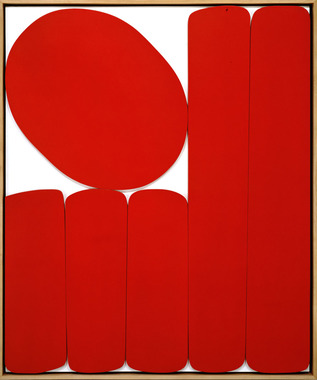
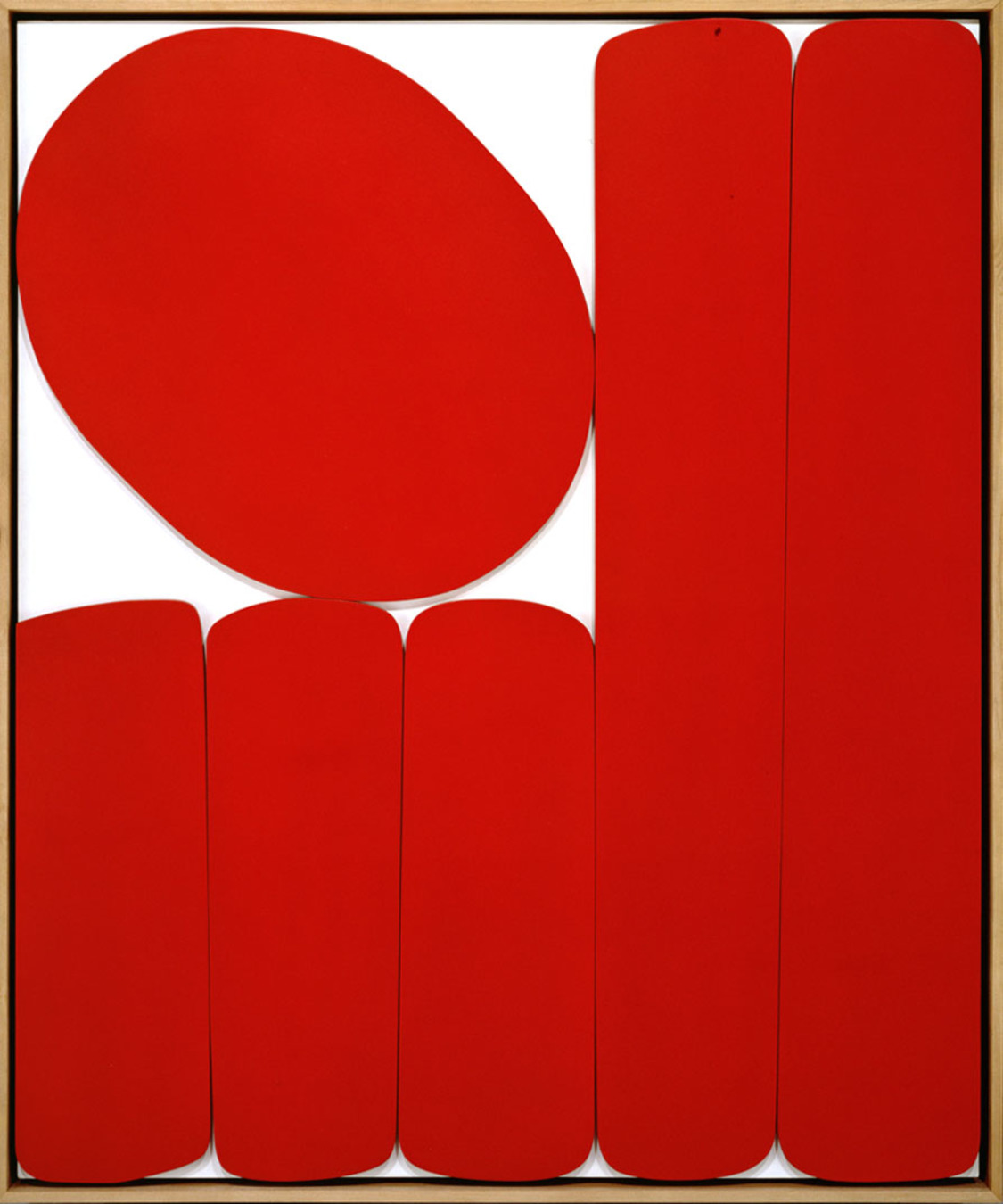
After losing most of his works during the war, Saito began recreating them in 1973. This is a reworking of a work first made in 1938, based on his memory and archival photographs. Consisting of several simply shaped boards pasted on a base board, it is a curious piece that defies simplistic categorization as painting or sculpture. The artist gave the work a humorous title, since the red boards resembled tuna fat.
(KASHIWAGI Tomoh)